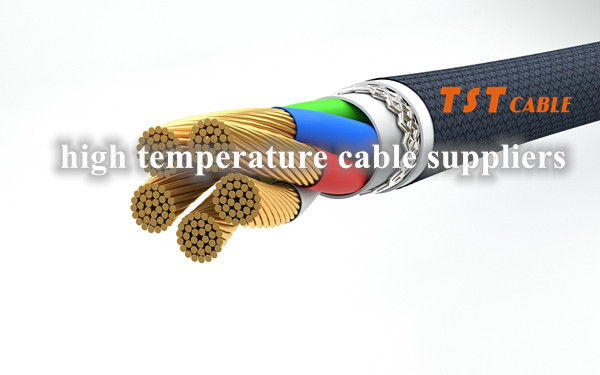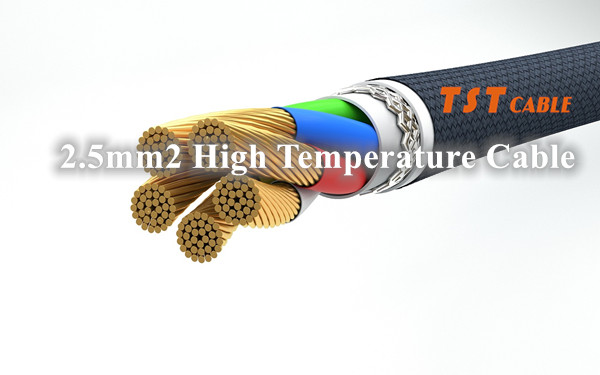

In deep well (typically referring to depths above 3000 meters) oil and gas extraction, submersible pump (ESP) systems operate under extreme environments of high temperature, high pressure, strong corrosion, high mechanical stress, and difficult heat dissipation, placing near-limit demands on cable reliability. TST CABLE ESP cables, through deep optimization of materials, structure, and processes, exhibit the following five specific advantages in deep well applications:
1. Ultra-High Temperature Stability: Withstands Long-Term Operation at 200℃+ Deep well bottom temperatures often reach 150–230℃, making ordinary EPR insulation prone to thermal aging and embrittlement;
TST CABLE uses fluororubber (FPM) or special cross-linked polyolefin insulation + HNBR/FKM sheath, achieving long-term operating temperatures of 180–230℃; Through accelerated thermal aging tests (230℃×500h), the insulation tensile strength retention rate is >80%, far exceeding API standards.
✅ Real-world case study: A shale gas deep well in Sichuan (4,200m, well temperature 215℃) used TST CABLE FKM sheathed ESP cable, which operated continuously for 38 months without insulation failure.
II. High pressure resistance structure: Withstands 30MPa+ hydrostatic column pressure. Deep well fluid column pressure can reach 30–50 MPa, easily flattening ordinary cables, leading to conductor contact and insulation breakdown. The high filler coefficient stranding + dense rubber coating + gapless design effectively resists external pressure. The sheath hardness is increased to 85±5 Shore A, with a deformation rate of <5% under 35 MPa water pressure.
III. Fully Sealed and Impermeable: Preventing Formation Fluid Intrusion
Deep well formation water has high salinity and contains H₂S/CO₂. If it seeps along the cable core, it will cause internal corrosion and short circuits.
The cable is integrally vulcanized, with no joints or gaps. The ends are equipped with double-layer heat-shrinkable sealant and epoxy resin potting, forming a “double-insurance” sealing system, passing a 72-hour 30MPa water pressure penetration test.
IV. Enhanced Mechanical Reliability: Tensile Strength, Abrasion Resistance, and Fatigue Resistance
The cable withstands enormous tension and friction during deep well lowering/removal. Optional aramid fiber or stainless steel wire reinforcing cores can be used, increasing the overall cable tensile strength to ≥50 kN. The flat cable structure optimizes bending performance, adapting to multi-stage directional drilling in deep wells, and has passed 10,000 dynamic bending fatigue tests without cracking.
V. Extend System Lifespan and Significantly Reduce Well Workover Costs
Deep well workover operations are expensive (up to 2-5 million RMB per operation), resulting in huge downtime losses.
TST CABLE ESP cables have a mean time between failures (MTBF) of 4-6 years (industry average 2-3 years). Comparative data from a Middle Eastern oilfield shows that after using TST CABLE deep well-specific cables, the annual failure rate of the ESP system dropped from 32% to 1%, saving over $8 million in annual maintenance costs.
In the darkness and high pressure of deep wells, cables are not just accessories, but the lifeline of production.
TST CABLE doesn’t just make “usable” cables; it makes deep well guardians that “dare to go down 4000 meters and maintain stable production for 10+ years”—because every meter of depth deserves to be conquered with ultimate reliability; every ton of crude oil deserves to be supported by meticulously crafted cables.
Also available in:
 English