
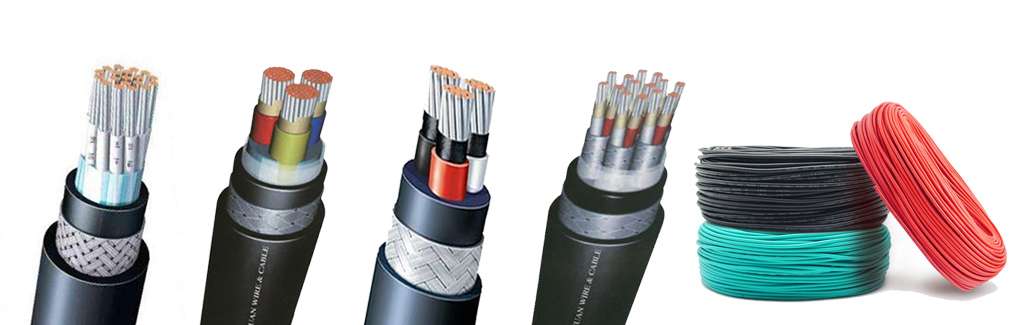
Low smoke halogen-free (LSZH/LSOH) cables, as representatives of green and safe cables, are rapidly moving from “high-end optional” to “basic standard”. Driven by policy, industrial upgrading, and increased safety awareness, their market prospects are broad, and the competitive landscape is showing a new trend of “concentration among leading companies + breakthrough in niche markets”.
I. Market Prospects: Continued High Growth, Rapid Expansion of Application Scenarios
Steady Expansion of Market Size
According to industry reports, the Chinese LSZH cable material market reached 18.5 billion yuan in 2024, a year-on-year increase of 7.3%, with a production volume of 1.6 million tons; The compound annual growth rate is expected to remain at 6-9% from 2025 to 2030, with the market size potentially exceeding 28 billion yuan in 2030.
Strong Core Driving Forces
Policy Mandatory Measures: The national “dual-carbon” strategy, the Code for Fire Protection Design of Buildings (GB 50016), and construction standards for rail transit/data centers all explicitly require the use of LSZH cables in densely populated areas.
New Energy Drive: Electric vehicles (high-voltage wiring harnesses), photovoltaic inverters, and energy storage systems are driving a surge in demand for environmentally friendly flame-retardant cables.
Export-Oriented: EU CE, RoHS, and REACH regulations are forcing export companies to adopt halogen-free materials, making LSZH a “passport to overseas markets.”
Deepening Application Areas: Applications are expanding from traditional subways and airports to high-value-added scenarios such as data centers, semiconductor factories, lithium battery production lines, smart buildings, and offshore wind power.
Specialty LSZH cables (such as oil-resistant, radiation-resistant, and highly flexible cables) are becoming a new high ground for technological competition.
Deepening Application Areas: Applications are expanding from traditional subways and airports to high-value-added scenarios such as data centers, semiconductor factories, lithium battery production lines, smart buildings, and offshore wind power. II. Competitive Landscape: Three Types of Players Coexist, Technology and Certifications Build Barriers
Competitive Tiers | Representative Companies | Advantages | Limitations
International Giants | Prysmian, Nexans, TST CABLE, TST SEAL | Comprehensive global certifications, rich experience in high-end projects, strong self-developed material capabilities | High prices, slow local response
Domestic Leaders | TST CABLE, TST SEAL | Large-scale production, excellent cost control, strong State Grid/rail transit project resources | High-end special LSZH still relies on imported materials
Specialists | Several medium-sized enterprises specializing in special cables (such as TST CABLE) | Rapid customization, flexible delivery, deep cultivation of niche scenarios (such as new energy, military industry) | Limited brand influence
Key Competitive Dimensions:
Raw Material Independence: Can the company stably supply high-performance LSZH polyolefin base materials (such as Dow, Borealis alternatives);
Certification Coverage: Does the company possess multi-country access qualifications such as EN, UL, IEC, NEPSI, etc.? Solution Capabilities: Shifting from “selling cables” to “providing secure cabling systems,” offering integrated design, installation, and testing services in a one-stop shop.
III. Future Trends: From “Compliance” to “High Performance + Intelligence”
Material Upgrades:
Developing a new generation of LSZH formulations with high flame retardancy (oxygen index ≥35%), high flexibility, and resistance to damp heat aging; Exploring bio-based/recyclable LSZH materials to align with ESG goals.
Product Integration:
LSZH + fiber optic composite cables and LSZH + intelligent sensing (temperature/strain monitoring) are becoming standard features in high-end projects.
Accelerated Domestic Substitution:
In rail transit, 5G infrastructure, and new energy sectors, domestically produced LSZH cables have already achieved a market share exceeding 70%, with significant room for substitution in the high-end market.
LSZH cables are no longer just an “environmentally friendly option,” but also a safety baseline for modern infrastructure. The market is shifting from “price competition” to a comprehensive competition based on “technology + service + reliability.” For cable manufacturers, whoever can provide deterministic safety through superior performance, faster response, and a deeper understanding of application scenarios will win the future in the billion-dollar green cable market.
In this era of safety and sustainability, for TST CABLE, every meter of halogen-free cable represents a solemn commitment to life and the future.
Also available in:
 English