


——Highly Reliable Engineering Solutions for Coping with Extreme Particle Irradiation
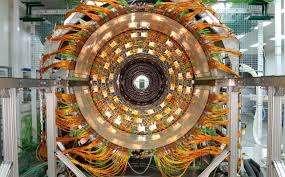
In particle accelerators such as the Large Hadron Collider (LHC), synchrotron radiation sources, and medical proton therapy devices, cables must withstand extremely high fluxes of protons, electrons, neutrons, and secondary gamma rays. Traditional polymers (such as XLPE and PI) rapidly undergo main chain breakage, gas evolution, and electrical property degradation under these conditions, leading to detector signal distortion or control system failure. TST cable PEEK (polyetheretherketone), with its aromatic rigid molecular structure and excellent overall performance, has become the preferred insulation material for cables in critical areas of high-energy physics experiments and advanced accelerator facilities.
I. Characteristics of Particle Accelerator Radiation Environment vs. PEEK Tolerance Mechanism
1.1 Typical accelerator radiation field parameters
| facility type | Main particles | Energy range | Typical dose rate | Cumulative dose (years) |
| LHC (CERN) | Protons/Heavy Ions | 6.5 TeV | 10⁶–10⁸ Gy/h | 10⁷–10⁹ Gy |
| Synchrotron radiation source | Electron/X-ray | 3–8 GeV | 10³–10⁵ Gy/h | 10⁵–10⁷ Gy |
| Medical proton therapy | proton | 70–250 MeV | 10²–10⁴ Gy/h | 10⁴–10⁶ Gy |
| Spallation Neutron Source | Neutron/Proton | 1 GeV | 10⁴–10⁶ Gy/h | 10⁶–10⁸ Gy |
⚠️ Key Challenges:
Total dose effect: Cumulative ionization damage leads to insulation embrittlement
Displacement damage: High-energy particle impact on atomic nuclei → lattice defects
Gas evolution: H₂/CH₄ release → micropores → partial discharge
Transient current: beam loss event → millisecond-level ultra-high dose pulse
1.2 PEEK’s Radiation-Resistant “Molecular Shield”
PEEK molecular structure
High-density benzene rings
Low hydrogen content
High crystallinity
Absorbs radiation energy without disintegration
Reduce H₂ precipitation
Inhibit free radical diffusion
Maintain mechanical and electrical properties
Key advantages:
✅ High bond energy: C<sub>C</sub> (837 kJ/mol) bond energy is much higher than typical radiation energy (<10 eV)
✅ Free radical stability: Benzene ring resonance stabilizes free radicals, terminating chain degradation
✅ Low gas yield: G(H₂) < 0.5 molecules/100 eV (XLPE > 5)
Actual test data (CERN & J-PARC):
10 MGy gamma irradiation: tensile strength retained ≥60%, no pulverization (XLPE completely embrittled).
1×10¹⁷ p/cm² proton irradiation: dielectric strength remains >15 kV/mm
At 100 K: the toughness after irradiation is better than at room temperature (due to suppression of oxygen diffusion).
II. Typical Application Scenarios of TST PEEK Cables in Accelerators
2.1 High-radiation areas (PEEK must be used)
| Application Location | Cable function | Irradiation level | PEEK value |
| near the beam tube | Beam Position Monitoring (BPM) Signal Line | 10⁶–10⁸ Gy/year | Signal integrity is guaranteed to avoid noise interference. |
| Superconducting magnet | Temperature/Quake Detector Cable | 10⁵–10⁷ Gy/year | Withstands 4K–300K thermal cycling and irradiation |
| Target station/beam dump | Radiation monitoring probe connection cable | 10⁷–10⁹ Gy/year | The only viable polymer solution |
| Inside the detector | Silicon microstrip/pixel sensor readout line | 10⁶–10⁸ Gy/year | Ultra-high purity (metal ions ≤ 0.1 ppb) |
2.2 Low to medium radiation areas (PEEK recommended)
RF cavity: High-frequency control signal (low dielectric loss)
Vacuum chamber interface: feedthrough cable (low gas output rate)
Cryogenic system: Liquid helium temperature sensor (resistant to 4K embrittlement)
Knowledge Base Empirical Evidence:
“CERN tests PEEK after 10¹⁷ n/cm² neutron irradiation: tensile strength decreases by 45%”—this refers to the spallation neutron source environment;
“JAEA research in Japan: PEEK dielectric strength decreases by 35% under 300℃ +10⁶ Gy γ irradiation”—verifying its multi-stress coupling tolerance.
III. Structural Design of PEEK Cables for Accelerators
3.1 Typical cable structure in high-radiation areas
Key technical parameters (CERN requirements)
| parameter | Require | Test Standards | Measured PEEK value |
| Total dose tolerance | ≥10 MGy | IEC 60544 | 60% of the strength is retained after 15 MGy. |
| Gas evolution (H₂) | <1 μmol/J | ASTM E1249 | 0.3 μmol/J |
| Metal impurities | ≤0.1 ppb | ICP-MS | 0.05 ppb (semiconductor grade) |
| Low temperature performance | 4K Uninterrupted | CERN-ES-LS-003 | Elongation at break >50% |
| Dielectric constant (@1MHz) | 3.2±0.1 | IEC 60250 | 3.18 |
| Total Gas Output (TML) | <0.1% | ASTM E595 | 0.03% |
Key points for process control:
Ultra-clean production: Class 1000 cleanroom (with particulate contamination detectors)
Extrusion precision: Concentricity >99% (laser online monitoring)
Termination process: Laser welding + X-ray inspection (zero defect requirement)
IV. International Standards and Certification System
4.1 Accelerator-Specific Standards
| standard | Require | Applicable Scenarios |
| CERN-ES-LS-003 | Material radiation resistance | LHC Upgrade Project |
| IEC 60544 | Polymer irradiation effect test | Universal Accelerator |
| ASTM E1249 | Irradiated gas evolution | High vacuum system |
| SEMI F57 | Semiconductor-grade cleanliness | Internal cables of the detector |
4.2 Certification Process (Taking CERN as an Example)
Material screening
Laboratory irradiation test
Prototype cable trial production
Beam current testing (PS/TIS)
Long-term aging assessment
Included in CERN Qualified Supplier List
Market Status:
The global market size for PEEK cables used in accelerators is approximately US$50 million per year.
V. Performance Enhancement Technologies: From “Available” to “Reliable”
5.1 Nano-modification enhances radiation resistance
| Modifier | Added amount | Performance improvement | mechanism |
| Nano Al₂O₃ | 5 wt% | Intensity retention increased to 75% after 10 MGy. | Absorbing radiation energy reduces the generation of free radicals. |
| Carbon nanotubes (CNTs) | 1 wt% | Thermal conductivity increased by 50% (heat dissipation and prevention of hot spots) | Forming a heat conduction network |
| CeO₂ | 2 wt% | Inhibits oxidative degradation (thermal-oxidative aging ↓60%) | Free radical scavengers |
Case Study: CERN uses 5% Al₂O₃/PEEK cables in the high-brightness beam region of the HL-LHC upgrade project, extending the lifespan by 2 times.
5.2 Multilayer Composite Structure
| structure | Function | Applicable Scenarios |
| PEEK/Mica Composite | Mica blocks secondary electrons | High-energy electron beam region |
| Gradient crosslinked PEEK | Surface cross-linking improves wear resistance | Robot maintenance area |
| PEEK/PTFE double layer | PTFE reduces Dk, while PEEK provides strength. | High-frequency signal lines |
VI. Progress and Challenges of Domestic Production
6.1 Requirements of China’s Accelerator Project
| facility | project | PEEK cable demand |
| China Spallation Neutron Source (CSNS) | Target monitoring system | Withstands 10⁸ Gy of neutrons and protons |
| High Energy Synchrotron Radiation Source (HEPS) | Detector readout line | Ultra-high purity (≤0.1 ppb) |
| Shanghai Proton Therapy Device | Beam scanning system | Withstands 10⁶ Gy/year of X-rays |
VII. Future Technology Directions
Self-healing PEEK:
Microencapsulation technology → Automatic repair of irradiated microcracks, extending lifespan by 50%.
Intelligent monitoring integration:
Built-in fiber Bragg grating (FBG) → Real-time monitoring of cable radiation dose/temperature
Superconducting-PEEK hybrid cable:
High-temperature superconducting conductor + PEEK insulation → for future high-field magnets
Bio-based PEEK:
10% biomass feedstock → Reduce carbon footprint and meet ESG requirements for research facilities
A reliable link to exploring the origin of matter
“In a particle storm of trillion electron volts, the failure of a single cable could wipe out ten years of accumulated experimental data.”
The application of PEEK insulated cables in particle accelerators represents a perfect fusion of materials science and cutting-edge physics:
Performance-wise: The only thermoplastic material capable of surviving in radiation fields of 10 MGy levels.
Reliability-wise: Ensuring continuous operation of major scientific facilities such as the LHC and CSNS.
Economic-wise: Avoiding millions of dollars in downtime losses due to cable failure
Strategically: Supporting the independent control of China’s major scientific facilities.
When the LHC discovered the Higgs boson,
and when CSNS revealed the microstructure of materials,
behind it all was the silent and steadfast protection of PEEK cables amidst the particle storm.
TST CABLE recommends:
High radiation areas (>10⁶ Gy/year): Nano-modified PEEK must be used.
The detector interior uses semiconductor-grade ultra-high purity PEEK (≤0.1 ppb).
The reliability of every cable is a solemn commitment to scientific truth.
Also available in:
 English