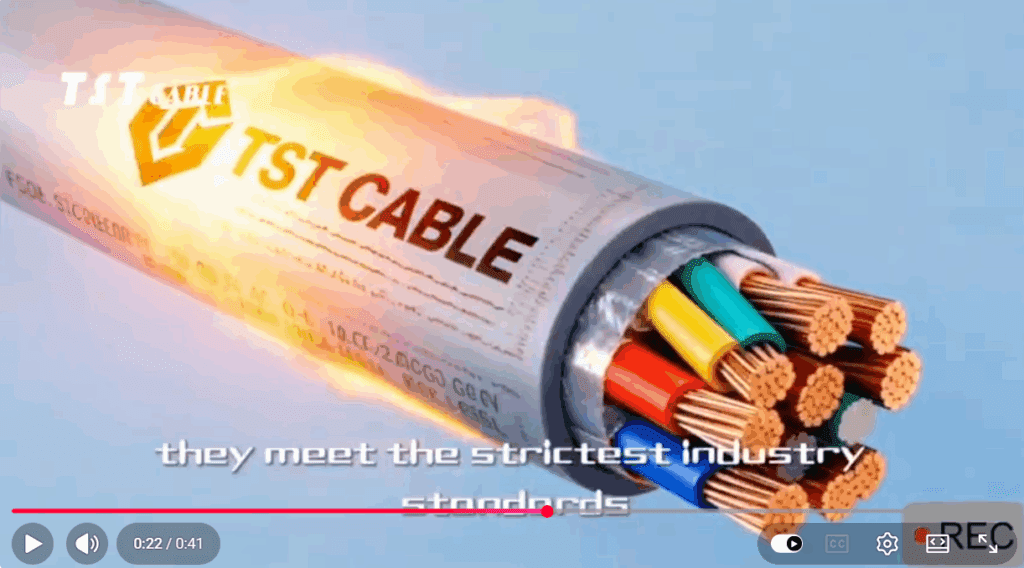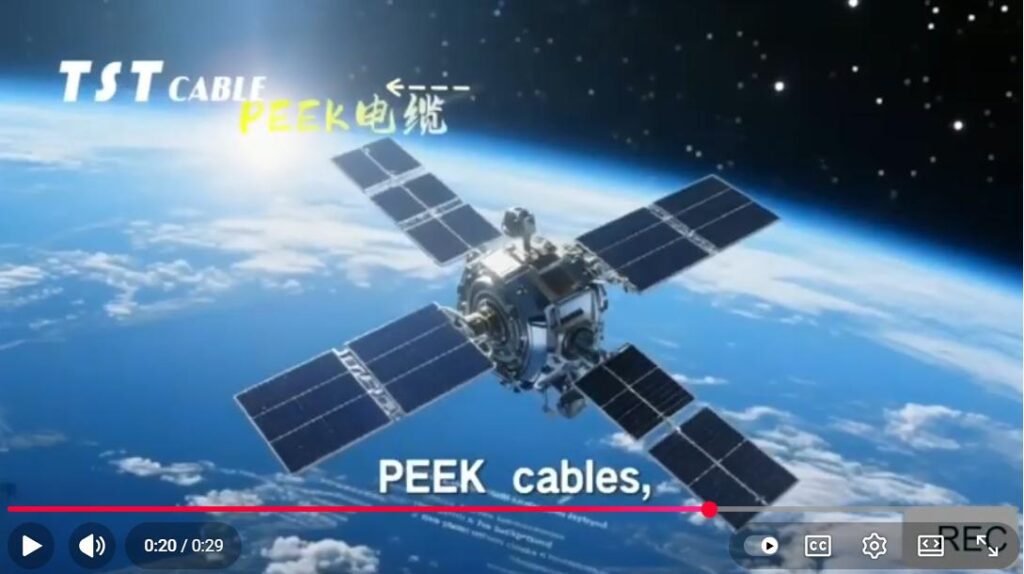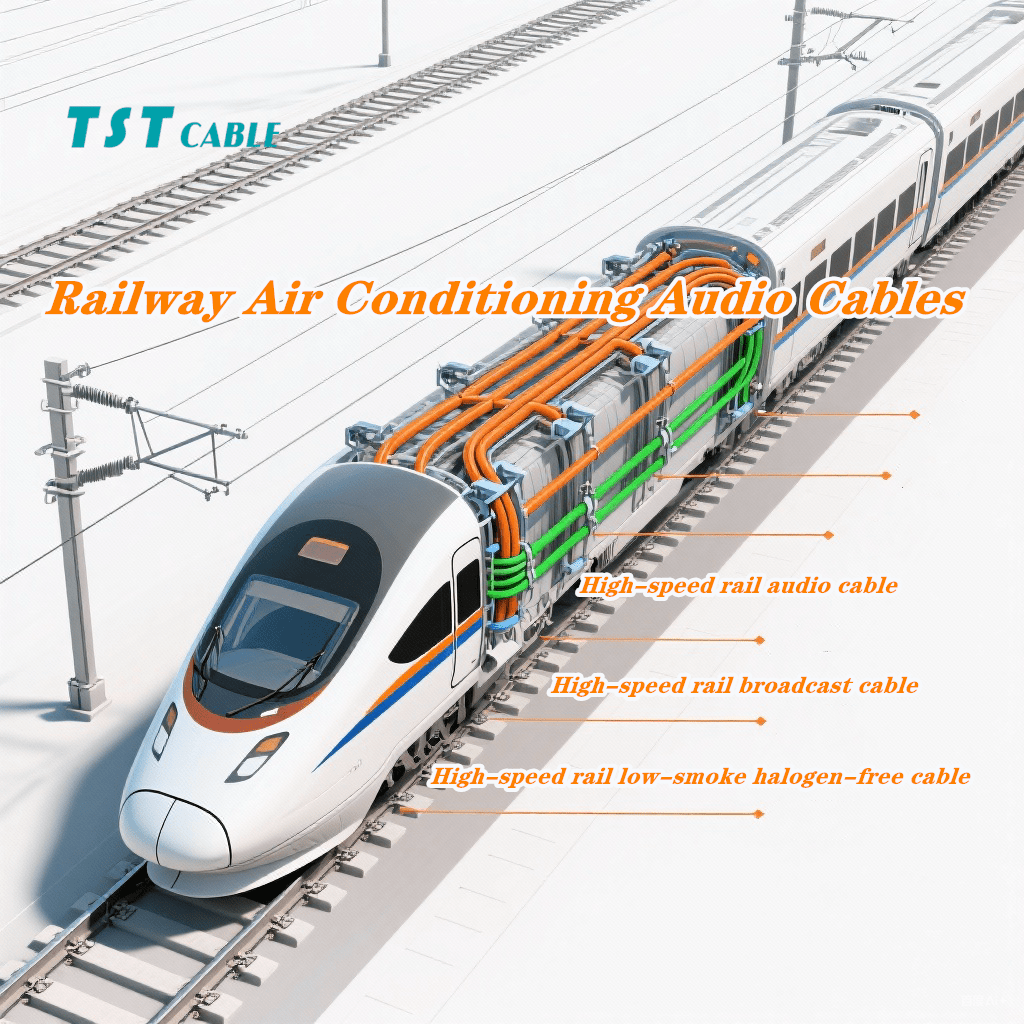

PEEK cables have indeed been widely used in the antenna brackets and cable outer layers of Beidou satellites, which is an important sign of the successful localization and engineering of high-performance special engineering plastics in China’s aerospace engineering.
✅ I. PEEK cable used for BeiDou three-star satellites
“The antenna support and cable outer layer of the Beidou three-star satellites cannot function without it.”
“Even when exposed to strong radiation, its performance will not decrease significantly.”
PEEK material is used in antenna support structures and cable outer sheaths in BeiDou-3 navigation satellites (i.e., “BeiDou-3”).
Its key advantage lies in its excellent space radiation resistance, ensuring long-term reliable operation in orbit.
✅ II. Why did BeiDou satellites choose PEEK for the outer layer of their cables?
1. Adaptability to extreme space environments
BeiDou satellites operate in medium Earth orbit (MEO, approximately 21,500 km), traversing the Van Allen radiation belts, and facing:
High-energy electron/proton irradiation (annual cumulative dose up to 10⁴–10⁵ Gy)
Extreme temperature cycling (-100℃ ↔ +125℃, every 90 minutes)
Atomic oxygen (LEO edge), ultraviolet radiation, high vacuum
✅ Advantages of PEEK cables :
Tolerance to total radiation dose > 100 kGy, performance degradation < 15%
Low coefficient of thermal expansion (≈45×10⁻⁶/℃), matched with metallic conductors, to avoid thermal stress cracking.
Extremely low gas yield (TML < 0.5%), meeting NASA/ESA space material standards.
2. Lightweight requirements
Satellite launch costs can reach $50,000–$100,000 per kg.
PEEK has a density of only 1.32 g/cm³, making it 60–70% lighter than traditional metal-armored cables.
✅ Effect: Each BeiDou satellite can be reduced in weight by tens of kilograms, significantly reducing launch costs.
3. Signal transmission stability
The BeiDou antenna operates in frequency bands including B1I (1575.42 MHz) and B3I (1268.52 MHz).
The outer layer of the cable must have a low dielectric constant (Dk ≈ 3.2) and a low loss tangent (tanδ < 0.002).
✅ PEEK performance: Stable dielectric properties, unaffected by temperature/radiation, ensuring phase consistency of navigation signals.
4. Long-term on-orbit reliability
BeiDou-3 has a designed lifespan of ≥12 years.
Traditional PTFE or PI cables are prone to embrittlement and discharge under long-term radiation.
✅ PEEK verification: Ground accelerated aging + irradiation test extrapolated life >15 years, meeting mission requirements.
✅ III. Technical Implementation
In BeiDou satellites, PEEK is mainly used in cable systems in two forms:
| Application areas | form | Function |
| cable outer sheath | Extruded PEEK thin-walled tubes | Radiation protection + mechanical protection + low exhaust gas |
| Antenna bracket/fixing clip | Injection molded or 3D printed PEEK structural parts | Fixed cable routing to maintain antenna geometric accuracy |
Technological highlights: Some brackets are made of carbon fiber reinforced PEEK (CF/PEEK), which has higher rigidity and less thermal deformation, ensuring antenna pointing accuracy.
✅ IV. Significance of Domestic Production of PEEK Cables
Breaking the monopoly: In the past, such materials relied on Victrex in the UK and Evonik in Germany.
Independent and controllable: Domestically produced PEEK such as TST CABLE/TST SEAL has passed aerospace-grade certification.
Cost optimization: The price of domestically produced PEEK is about 60% of that of imported products, supporting the large-scale deployment of the BeiDou constellation (30+ satellites).
✅ V. Extended Value
The successful application of PEEK in BeiDou has extended to other aerospace engineering projects:
High-resolution remote sensing satellite
Tiangong Space Station Experiment Module
Partial cable assembly of the Mars probe (Tianwen-1)
PEEK cables are widely used in the support structure and outer layer of BeiDou satellite antennas , and have significant engineering and strategic importance.
It not only solved the three core problems of space radiation, lightweighting, and signal stability, but also marked China’s independent breakthrough in the field of high-end special engineering plastics, laying the material foundation for subsequent deep space exploration and mega-constellations (such as the GW constellation).
TST CABLE, a small PEEK cable, protects the BeiDou Navigation Satellite System; a confidence in materials lays the foundation for a strong aerospace nation.
Also available in:
 English