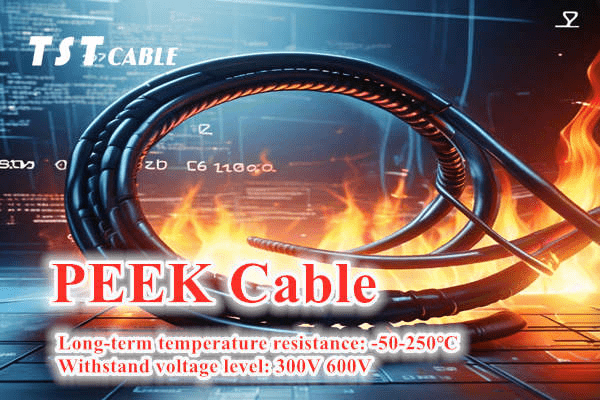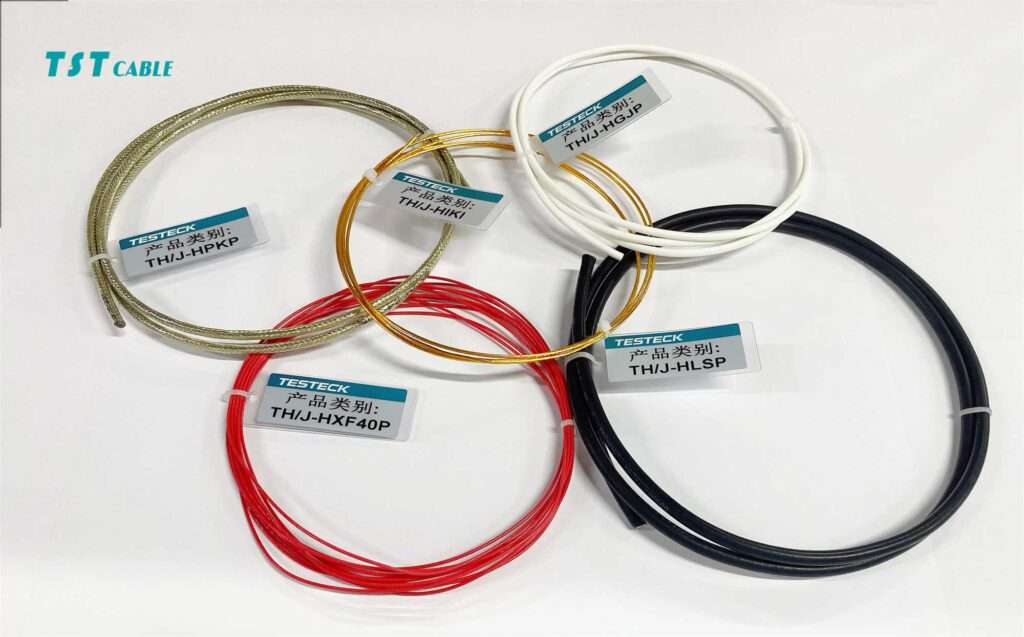

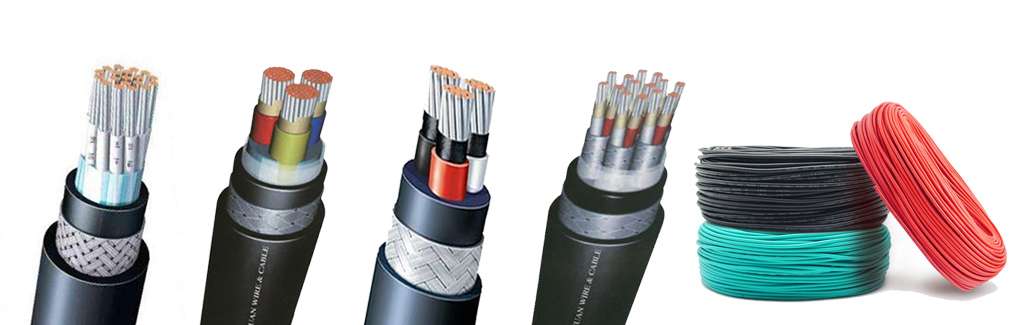
PEEK (polyetheretherketone) insulated wires play a crucial role in the nuclear power industry, providing highly reliable electrical connections in extreme environments. Their applications focus on safety-related systems, particularly in areas requiring long-term stable operation under high radiation, high temperature, high humidity, and accident conditions. The following are specific application scenarios and technical value of PEEK cables:
I. Application of PEEK Insulated Wires in Key Equipment within the Nuclear Island of Nuclear Power Plants
1. Control Rod Drive Mechanism (CRDM)
Function: Precisely controls the insertion/lifting of neutron absorber rods via electromagnetic coils to adjust reactor power or perform emergency shutdown.
PEEK function:
As an insulating layer between the winding leads and the internal connecting wires;
It can withstand frequent electromagnetic shocks, high-temperature steam at 150–200℃, and strong gamma radiation (>50 Mrad).
PEEK’s high dielectric strength (>20 kV/mm) and corona resistance prevent partial discharge from causing insulation breakdown.
Advantages: Compared to traditional mica + glass fiber wrapped wire, PEEK extruded insulation is denser, has no air gaps, and has a lifespan that is more than twice as long.
2. In-Core Instrumentation Cables
Function: Connects to sensors such as core neutron flux detectors and thermocouples to monitor the reactor’s operating status in real time.
PEEK function:
Direct exposure to high neutron flux + gamma ray field (annual dose can reach 10–100 Mrad).
PEEK does not become embrittled under irradiation and does not significantly release gas (low gas release), thus avoiding contamination of the coolant;
The insulation resistance remains >10⁹ Ω even at high temperatures (300℃ LOCA accident simulation).
The standard requires that the test must pass the IEEE 383 irradiation aging test and the IEEE 323 environmental qualification test.
3. Main pump motor and auxiliary system windings
Functions: Drives the reactor coolant main circulation pump, emergency diesel generator, etc.
PEEK function:
Used for insulation of stator winding end leads or slots;
Tolerance to oil mist, vibration, and humid hydrogen environments (within the pressurized water reactor containment);
Flame-retardant and halogen-free, meeting the fire safety requirements of RCC-E (French nuclear code) or ASME NQA-1.
II. Containment Penetration Components and PEEK Insulated Cable Assemblies
Application location: Internal wiring of electrical penetrations (EPAs) within the containment building.
PEEK function:
Under LOCA (Loss of Water Accident) conditions (170℃, 0.4 MPa saturated steam for 30 days), PEEK insulation does not melt or crack;
In conjunction with the metal sealing structure, it maintains the integrity of the pressure boundary of the penetration component;
The low-smoke, halogen-free characteristics ensure that personnel can enter the containment to intervene after an accident.
III. Spent Fuel Processing and Back-End Facilities
Application scenarios:
Control line for underwater transfer equipment in spent fuel pool;
Signal lines for robotic arms inside the hot cell of a fuel aftertreatment plant;
Sensor leads for radioactive waste solidification system.
PEEK advantages:
It is resistant to boron-containing water, nitric acid/hydrochloric acid vapor, and long-term gamma radiation.
The surface is smooth and non-absorbent, preventing the adhesion of radioactive nuclides;
It can be reused by cleaning (such as with an alkaline potassium permanganate solution).
IV. Technical Certification and Standard Requirements for PEEK Insulated Wires
PEEK insulated wires used in nuclear power must meet stringent certification systems:
| Certification/Standard | Requirements |
| IEEE 323 | Environmental assessment of nuclear-grade equipment (thermal aging, irradiation, LOCA, vibration) |
| IEEE 383 | Type testing of Class 1E cables for nuclear power plants |
| RCC-E (France) | The material is radiation resistant, flame retardant, and has low smoke toxicity. |
| KTA 3401 (Germany) | Cable’s ability to retain function under fault conditions |
| ASME NQA-1 | The quality assurance system covers the entire process of design, manufacturing, and inspection. |
✅ Typical performance indicators:
Radiation tolerance: ≥100 Mrad (gamma)
Continuous operating temperature: 250℃
Oxygen index: ≥35% (self-extinguishing)
Halogen content: <0.1% (IEC 60754)
V. Why choose TST CABLE PEEK cable instead of traditional materials?
| Material | Nuclear power application defects | Advantages of TST CABLE PEEK Cables |
| silicone rubber | After irradiation, the surface hardens and cracks, releasing a large amount of gas. | Excellent irradiation stability and low gas release |
| PTFE | Deformation occurs during cold flow, and creep is severe at high temperatures. | High rigidity and creep resistance |
| mica belt | Multi-layered structures are prone to moisture absorption and have poor bending properties. | Single-layer extrusion results in a dense, non-porous structure with better flexibility. |
| Cross-linked polyolefins | Temperature resistance ≤150℃, not suitable for high-temperature areas. | Long-term use at 250℃ |
In the “last mile” of nuclear safety, performance reliability cannot be compromised.
Although TST cable PEEK insulated wires are as thin as a hair, they are the nerve endings for safe reactor shutdown, condition monitoring, and accident response.
They do not participate in energy production, yet they safeguard the controllability and reliability of the entire system.
In humanity’s journey to master atomic energy,
behind every safe shutdown, there are TST cable PEEK cables silently standing guard amidst radiation storms.
As the nuclear power industry creed states:
“The last line of defense in depth must be built with the most reliable materials.”
— And TST CABLE PEEK cable is a key component of this barrier.
Also available in:
 English