
Analysis of the Uses and Applications of PEEK Insulated Wires in Thermal Power Plants
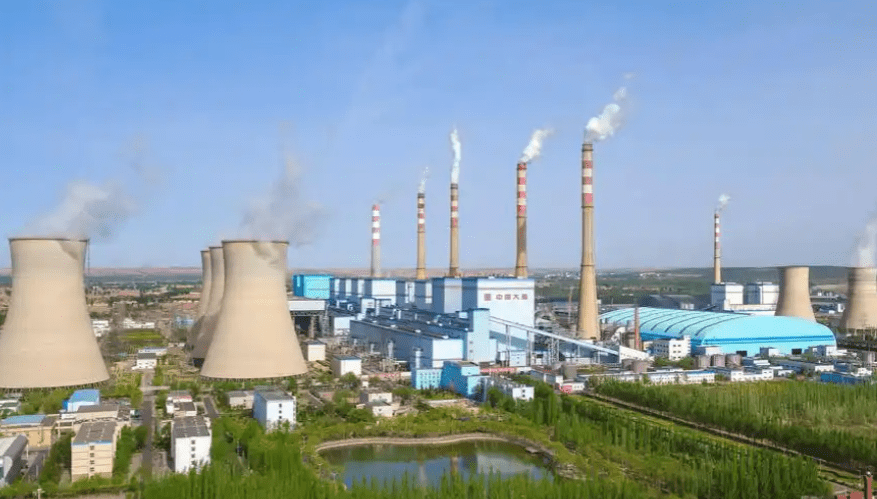
Although thermal power plants are free from nuclear radiation, they still face harsh operating conditions such as high temperature, high humidity, high dust, chemical corrosion, and strong vibration. PEEK insulated wires, with their characteristics of high temperature resistance up to 250℃, excellent electrical properties, chemical corrosion resistance, and long service life, play a crucial role in critical high-temperature areas and systems with high reliability requirements in thermal power plants.
I. Typical High-Temperature/Harsh Operating Conditions in Thermal Power Plants
| area | Temperature range | Environmental characteristics | Pain points of traditional cables |
| Boiler body | 200–600℃ | High temperature radiation, dust, vibration | Silicone hardens easily, and mica wire absorbs moisture easily. |
| Steam Turbine Nacelle | 150–250℃ | High-temperature steam, oil mist, vibration | PVC softens, XLPO ages quickly |
| Flue gas desulfurization (FGD) | 80–180℃ | Acidic gases, high humidity, corrosive | Ordinary sheaths are prone to corrosion and perforation. |
| SCR (Self-Reducing Catalytic Reduction) System | 300–400℃ | High temperature, ammonia corrosion | Traditional materials have insufficient temperature resistance |
| Coal mill area | 80–150℃ | Coal dust, abrasion, vibration | Insulation is easily worn down and broken down |
| Transformer/Switchroom | 60–120℃ | Electromagnetic interference, localized high temperature | Signal interference, insulation aging |
II. Specific Application Scenarios of TST CABLE PEEK Insulated Wire
1. Boiler temperature/pressure sensor leads
Application locations: Measurement points in superheaters, reheaters, economizers, air preheaters, etc.
Operating conditions: Long-term temperature 150–250℃, instantaneous temperature up to 300℃+
PEEK advantages:
It can withstand continuous operation at 250℃, far exceeding silicone (180℃) and XLPO (150℃).
It resists thermal cycling fatigue and does not crack during boiler start-up and shutdown;
Stable dielectric properties ensure the accuracy of thermocouple/pressure transmitter signals.
2. Steam Turbine Monitoring and Control System (TSI)
Applications: Connection cables for shaft vibration, displacement, speed, and temperature sensors.
Operating requirements: High-temperature steam environment, strong vibration, high reliability
PEEK advantages:
It can withstand steam environments exceeding 150℃ and is insulating without hydrolysis.
Resistant to vibration fatigue, preventing accidental shutdowns caused by signal interruption;
Low smoke and halogen-free, meeting the fire safety requirements of power plants.
3. High-temperature valve actuator cable
Applications: Electric actuators for main steam valves, reheat valves, and extraction steam valves.
Operating conditions: ambient temperature above 200℃, frequent start-stop cycles, outdoor exposure.
PEEK advantages:
It is resistant to ultraviolet rays, rain, and sudden temperature changes;
High mechanical strength, resistant to external damage;
With a lifespan of up to 20 years, it reduces the frequency of maintenance and replacement.
4. Flue gas purification system (FGD/SCR)
Application locations: Desulfurization towers, absorption towers, catalyst reactor areas
Operating conditions: acidic gases (SO₂, NOx), high humidity, corrosive.
PEEK advantages:
Resistant to corrosion by sulfuric acid, nitric acid, and ammonia; the sheath does not swell.
It can withstand high-temperature flue gas up to 180℃ and is suitable for denitrification system operating conditions.
Flame-retardant and low-smoke, meeting power plant fire protection standards.
5. Power and control lines for coal mills/feeders
Applications: Coal mill motors, coal feeder drive systems
Operating conditions: coal dust, abrasion, vibration, localized high temperature
PEEK advantages:
High wear resistance and resistance to coal dust erosion;
Vibration and bending resistant, adaptable to frequent equipment start-ups and shutdowns;
It has good dustproof and sealing properties, preventing dust intrusion that could cause short circuits.
6. Transformer/generator leads
Applications: Main transformers, plant service transformers, generator stator windings
Operating conditions: High voltage, localized high temperature, electromagnetic interference.
PEEK advantages:
High dielectric strength (>20 kV/mm), resistance to partial discharge;
High CTI (>600V) to prevent arc creepage;
High temperature resistant and adaptable to overload conditions.
7. Emergency/Safety System Cables
Applications: DC power systems, emergency lighting, fire pump control
Operating requirements: The system must maintain functionality even during a fire.
PEEK advantages:
Flame retardant V-0 rating, halogen-free and low smoke;
It maintains its insulation integrity even at 250℃;
It meets the flame retardant and fire-resistant requirements of GB/T 19666.
III. Comparison of TST CABLE PEEK Cables and Traditional Thermal Power Plant Cables
| Performance indicators | TST CABLE PEEK cable | silicone cable | Mica + Glass Cable | XLPO cable | PVC cable |
| Continuous temperature resistance | 250℃ | 180℃ | 500℃ (but brittle) | 150℃ | 105℃ |
| acid resistance | excellent | middle | Poor (HF acid) | middle | Difference |
| abrasion resistance | Excellent | middle | Difference | middle | Difference |
| Vibration resistance | excellent | excellent | Difference | middle | middle |
| life | 20–30 years | 10–15 years | 5–10 years | 10–15 years | 5–8 years |
| cost | high | middle | middle | Low | lowest |
IV. Practical Application Value of TST CABLE PEEK Cable
| Value Dimension | Specific manifestations |
| Reduce unplanned downtime | Failure of critical sensor cables is a common source of power plant failures; PEEK can significantly reduce the failure rate. |
| Extend maintenance cycle | Traditional cables need to be replaced every 10 years, while TST CABLE PEEK cables can last 20–30 years, reducing the amount of major repairs required. |
| Improve signal accuracy | Stable dielectric properties at high temperatures, minimal thermocouple signal drift, and more precise combustion control. |
| Reduce total life cycle cost | Although the initial cost is 2–3 times higher, the total cost of ownership (TCO) is reduced by 40–60%. |
| Safety and compliance | Meets power industry standards such as GB/T 19666 and DL/T 802. |
five, PEEK Cable Selection Recommendations
| Application Area | Recommended specifications | Key Certification |
| Boiler measuring points | Nickel-plated copper conductor + 0.3mm PEEK insulation | GB/T 19666 Flame Retardant |
| Steam Turbine TSI | Shielded PEEK cable (aluminum foil + braid) | DL/T 802 Power Cable |
| FGD/SCR area | PEEK+ acid-resistant outer sheath | ISO 15156 H₂S Resistance |
| Coal mill area | Thickened sheath PEEK cable (0.5mm+) | Abrasion resistance test report |
| Transformer lead | High dielectric strength PEEK (>25 kV/mm) | GB/T 12706 |
Upgrading thermal power plant safety starts with a single TST CABLE PEEK cable .
Under the “dual carbon” goal, thermal power plants are transforming towards high efficiency, stability, intelligence, and long lifespan.
Although TST CABLE PEEK insulated wire is not a main piece of equipment, it is a key detail that ensures the accuracy of the control system, reduces unplanned outage losses, and extends the lifespan of the unit.
True power plant reliability
lies not only in boilers and turbines,
but also in every cable that remains stable at high temperatures.
TST CABLE recommends
prioritizing the use of our PEEK insulated wires in critical measurement points, high-temperature areas, and safety systems. This ensures that
a certain initial investment is made in exchange for the elimination of uncertain fault risks—
this is the underlying logic of smart power plants.
Also available in:
 English