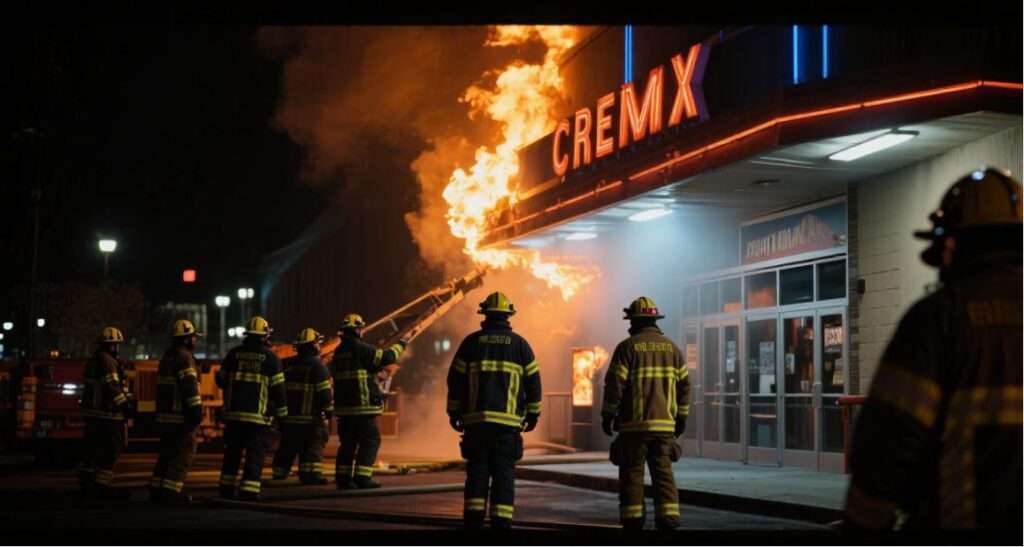

In the highly enclosed, densely populated, and difficult-to-evacuate environment of a ship, fire is a deadly threat. Traditional halogen-containing cables (such as PVC) release large amounts of dense smoke and toxic corrosive gases (such as hydrogen chloride) when burning, which not only obstructs escape routes but also damages precision equipment and can even lead to secondary disasters. For this reason, TST CABLE’s marine low smoke halogen-free (LSOH / LSZH) cables have become a safety standard for modern ships, especially passenger ships, cruise ships, warships, research vessels, and offshore engineering vessels.
I. Core Advantages of TST Marine Low Smoke Halogen-Free Cables (LSOH / LSZH): More than just “environmentally friendly,” it’s about “saving lives”
Table
| Comparison Dimensions: | Traditional PVC marine cables: | TST CABLE Marine Low Smoke Halogen-Free Cable (LSOH): |
| Combustion Smoke Density | Very high smoke density (light transmittance < 20%), | Extremely low smoke (light transmittance ≥60%, compliant with IEC 61034), |
| Toxic Gases | Release HCl and other hydrogen halides, which are highly corrosive, | Virtually halogen-free (≤0.5%), mainly producing CO₂ + water, |
| Equipment Protection | Acidic gases can corrode circuit boards and sensors, | Combustion residue is neutral, protecting critical electronic systems, |
| Personnel Safety | Inhalation can cause suffocation and burns to the respiratory tract, | Significantly reduces the risk of casualties in case of fire, |
| Environmental Compliance | Does not meet IMO and EU green ship requirements. | Complies with RoHS, REACH, and MARPOL Annex VI. |
✅ Actual Measurement Data: Under the same fire conditions, visibility in the LSOH cable area can be maintained at >10 meters, providing 3-5 minutes for personnel evacuation.
II. Key Technical Characteristics of TST CABLE Marine Low Smoke Halogen-Free Cable (LSOH)
Advanced Material System
Base Material: Utilizes flame-retardant polyolefin (FR-PO), achieving halogen-free flame retardancy through the addition of metal hydroxides (such as ATH, MDH);
Optimized Flexibility: Nano-modification technology solves the “hard and brittle” problem of traditional LSOH cables, achieving bending performance close to PVC;
Improved Weather Resistance: UV resistant, salt spray resistant, and mildew resistant, suitable for open-air deck installation.
Reliable Electrical and Mechanical Performance
Rated Voltage: 300/500V (control/signal), 0.6/1kV (power);
Operating Temperature: -40℃ ~ +90℃ (some models reach 105℃);
Bundled Flame Retardant: Meets IEC 60332-3 Class A (highest level), suitable for high-risk areas such as cabins and corridors.
Full range coverage
Power cables, control cables, instrumentation cables, communication cables (including Cat5e/Cat6), coaxial cables, etc., can all be customized in LSOH versions.
III. Typical Application Scenarios of TST CABLE Marine Low Smoke Halogen-Free Cables (LSOH) (Table)
| Ship Types | Application areas: | Safety requirements based on: |
| Cruise ships/Passenger ships | Cabins, dining rooms, corridors, entertainment areas | SOLAS Chapter II-2 mandatory requirements for low smoke and halogen-free materials |
| Warships/Submarines | Cockpit, communication room, living quarters | NATO AEC 167, GJB standards |
| Research vessels/Hospital ships | Laboratories, medical areas, data centers | Ensuring the safety of precision instruments and personnel health |
| LNG carriers | Superstructure, control room | IGF Code + Classification society additional fire protection regulations |
| Offshore wind farm maintenance vessels | Lifting platforms, control cabinets | DNV-RU-SHIP Part 6 requirements |
�� Mandatory Regulations: According to the International Convention for the Safety of Life at Sea (SOLAS) and the regulations of major classification societies, ships carrying more than 36 passengers must use low-smoke halogen-free cables for all non-main propulsion circuits.
IV. Selection and Certification Points for Marine Low-Smoke Halogen-Free Cables (LSOH)
Acceptance Standards:
Halogen-Free: IEC 60754-2 (Halogen acid ≤5 mg/g)
Low Smoke: IEC 61034-2 (Light transmittance ≥60%)
Flame Retardant: IEC 60332-3-22 (Class A bundled burning)
Classification Society Certification: Type approvals from DNV, LR, ABS, CCS, etc., are required; TST CABLE marine low-smoke halogen-free cables (LSOH) have obtained certifications from multiple classification societies.
Color Marking: Typically uses gray, orange, or blue sheaths for easy differentiation from ordinary cables.
V. Advantages of TST CABLE Marine LSOH Cables
✅ All models meet IEC 60092-350/353/354/359 standards;
✅ Enhanced flexibility: Minimum bending radius of 6×D, suitable for installation in confined spaces;
✅ Temperature resistance up to 105℃: Meets the requirements of high-temperature areas at the edge of the engine room;
✅ Supports composite structures: Integrated design of power, signal, and fiber optic cables, reducing the number of conduits required;
✅ Global ship inspection support: Provides on-site inspection cooperation with ABS/CCS/DNV/LR, etc.
Conclusion: Safety starts with a single cable
On the vast ocean, ships are floating homes.
When a fire breaks out,
Low smoke makes escape routes visible;
Halogen-free makes breathing more possible.
Choosing TST CABLE marine low-smoke halogen-free cables (LSOH)
is not an increase in cost,
but the most solemn commitment to life—because true maritime safety lies hidden in every unseen detail of the deep sea.
Also available in:
 English