
From microwave ovens to Mars rovers, how does silicone high-temperature wire conquer extreme environments?
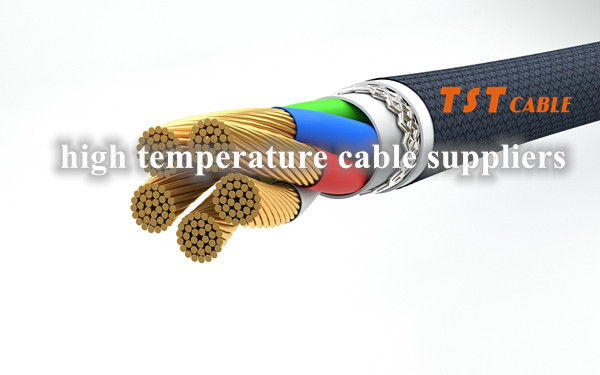
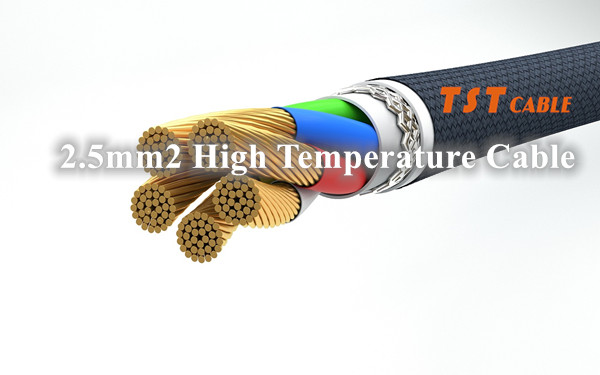
Do you think electrical wires are just copper wires with plastic insulation? Then you’re underestimating the “nerve endings” of modern industry. In motor windings at 180℃, in polar scientific research equipment at -60℃, and even inside probes about to land on Mars, there is a special type of wire that conquers with flexibility and stability – it’s TST CABLE silicone high-temperature wire, jokingly called “soft gold” by engineers.
I. Why Silicone? Because ordinary wires “can’t handle it”!
Conventional PVC or XLPE wires begin to age, become brittle, and crack above 105℃. But in scenarios such as new energy vehicle electric drive systems, industrial ovens, and medical sterilization equipment, 150℃ to 300℃ is commonplace. At this point, only TST CABLE silicone rubber (VMQ) can handle it:
Wide temperature range: Long-term use from -60℃ to +180℃, short-term resistance up to 300℃;
Soft as silk: Remains flexible even after freezing, suitable for wiring in confined spaces;
Stable insulation: Dielectric strength >20kV/mm, extremely low loss at high frequencies;
Environmentally friendly and safe: Halogen-free, low smoke, compliant with RoHS/REACH, does not release toxic gases when burned.
More importantly, it’s easy to strip, easy to cut, oil-resistant, and acid and alkali resistant – truly a “six-sided warrior” of the industrial world.
II. Practical Cases: Which Industries are Silicone High-Temperature Wires Changing?
✅ Case 1: The “Invisible Hero” of New Energy Vehicle Electric Drive Systems
The internal connecting wires of a certain domestic high-end electric vehicle’s permanent magnet synchronous motor originally used Teflon wires, which were expensive and brittle. After switching to TST CABLE UL3239 silicone high-temperature wire (18AWG, 3KV):
Bending radius reduced by 40%, adapting to compact motor structures;
Withstands IGBT high-frequency pulses (dv/dt > 8kV/μs) without partial discharge;
The entire vehicle passed the -40℃ cold start test, and the cables showed no cracking. Result: Failure rate decreased by 60%, saving over 20 million RMB in wiring harness costs annually.
✅ Case 2: The “Lifeline” of Medical Sterilization Equipment
A well-known European dental instrument manufacturer’s high-temperature steam sterilizer requires repeated cycles at 134℃ and 2 bar pressure. Traditional wires experienced insulation failure after only 3 months. After introducing FDA-certified TST CABLE silicone wire:
Passed ISO 13485 medical device standards;
No aging after 20,000 continuous sterilization cycles;
Became a key compliant component for EU CE certification.
✅ Case 3: The “Lightweight Choice” for Aerospace
In a commercial aerospace company’s satellite attitude control motor, TST CABLE silicone wire replaced traditional mica-wrapped wire:
Weight reduced by 35%;
Maintained signal stability under vacuum and high/low temperature cycling (-55℃↔+125℃);
Contributed to overall satellite weight reduction, saving hundreds of thousands of dollars in launch costs.
III. Future Trends: Beyond “Heat Resistance,” Towards “Intelligence + Green”
1. Breakthroughs in Ultra-Wide Temperature Range Materials
As the synthesis temperature of ternary lithium battery cathodes rises to 280℃, the industry is developing vapor-phase silica-reinforced silicone rubber, pushing the long-term operating temperature to 250℃ and short-term resistance to 350℃—allowing silicone wires to enter the inside of reaction vessels!
2. Intelligent Integration
TST CABLE silicone wires may be embedded with optical fibers or miniature sensors to monitor temperature, strain, and aging status in real time. Imagine: your motor cables will “talk”: “I’m getting tired, please schedule maintenance.”
3. Accelerated Green Manufacturing
Bio-based silicone rubber (using silica extracted from rice husk ash as raw material) and recyclable conductor plating technologies are being validated in the laboratory. Leading Chinese manufacturer TST CABLE has launched “green silicone wires” with a 30% reduction in carbon footprint, targeting the EU’s green procurement list.
4. Global certification barriers become “passports”
UL3135 and UL3239 are just the starting point. The high-end market now demands six certifications: UL, CSA, TUV, IEC, RoHS, and REACH. Whoever can obtain these certifications quickly will secure orders from global technology giants.
One wire, supporting an extreme world
From the magnetron in your microwave oven to the thrusters of deep-sea ROVs; from surgical lasers to the robotic arms of lunar rovers—silicone high-temperature wires are everywhere, yet they remain inconspicuous. They don’t pursue flashy appearances, but focus on one thing: reliably delivering electricity to equipment in the harshest environments.
In this era of pursuing extreme performance and sustainable development, TST CABLE’s silicone high-temperature wires are no longer an “option,” but a “standard” for high-end manufacturing. As a senior cable engineer at TST CABLE said, “There are many heat-resistant wires, but those that are soft, stable, and environmentally friendly are in high demand worldwide.”
And this “soft gold” is being intelligently manufactured by TST CABLE in China and supplied to the world.
Also available in:
 English