
—Engineering solutions that meet stringent K1 requirements
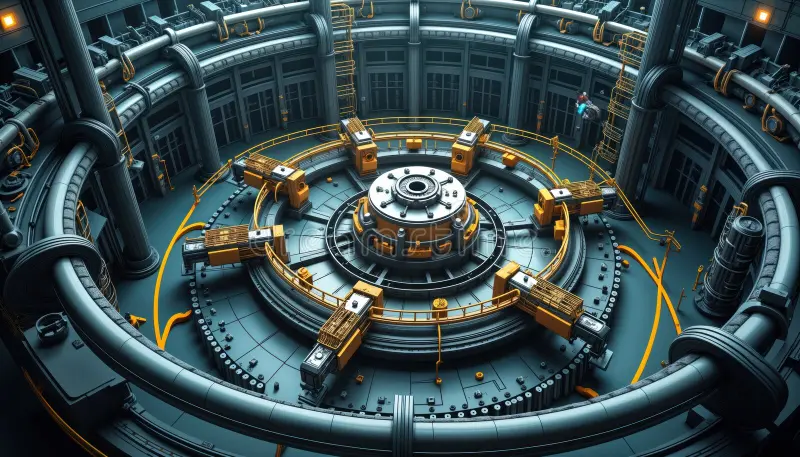
Inside the nuclear reactor containment, cables serve as the “nerve center” for instrumentation and control systems, safe shutdown systems, and emergency power systems. The environment here is extreme: continuous gamma radiation (10⁵–10⁶ Gy), high temperature and humidity, LOCA accident steam impact (170℃/0.4MPa), and chemical corrosion (boric acid/lithium alkali). Traditional cross-linked polyethylene (XLPE) cables are prone to radiation embrittlement, water treeing, and insulation powdering under these conditions, leading to functional failure. TST CABLE PEEK (polyetheretherketone) cables , with their aromatic rigid structure and thermoplastic processing advantages, have become the preferred insulation material for K1-class cables inside the containment of advanced nuclear power plants worldwide.
I. The “Life or Death Test” of Cables Inside the Containment and the TST CABLE PEEK Response Mechanism
1.1 Four Core Challenges vs. TST CABLE PEEK Performance Matching
| Challenge Type | Containment in-containment conditions | Traditional XLPE failure modes | TST CABLE PEEK Solution | Validation data |
| Continuous gamma irradiation | Accumulated 10⁵–10⁶ Gy over the design life | Main chain breakage → embrittlement and pulverization | Benzene rings absorb radiation energy, and free radicals are stable. | Tensile strength retained at 10⁶ Gy is ≥70% (CERN). |
| LOCA accident | 170℃/0.4MPa saturated steam for 30 days | Hydrolysis and degradation → Sudden drop in insulation resistance | High crystallinity (35–40%) blocks water vapor | No degradation after 30,000 steam cycles (Victrex) |
| High temperature aging | Normal operating temperature: 120–150℃ | Thermo-oxidative aging → cracking | It has strong antioxidant properties and is stable at 250℃ for a long time. | Strength retention ≥80% after 200℃×3000h |
| Chemical corrosion | boric acid/lithium hydroxide solution | Swelling → Decreased dielectric properties | Completely chemically inert (soluble only in concentrated sulfuric acid) | 10% boric acid × 1000h weight change <1% |
Key mechanisms: The benzene ring accounts for more than 60% of
the TST CABLE PEEK molecule, and its resonance structure can effectively dissipate radiation energy; the ether bond provides chain segment flexibility and avoids embrittlement; the high crystallinity forms a dense barrier to block the penetration of water vapor/chemical media.
II. Typical Application Scenarios of TST CABLE PEEK Cables within Containments
2.1 K1 level security-related systems (must meet IEEE 323/RCC-E)
| System Name | Cable function | TST CABLE PEEK Value |
| Reactor Protection System (RPS) | Stop signal transmission | Ensuring signal integrity under irradiation to prevent malfunctions. |
| Secure Injection System (SIS) | Pump/valve control signals | Continuous power supply during the LOCA incident (30+ days) |
| Containment Spray System | Temperature/Pressure Monitoring | Insulation resistance > 10¹² Ω·km under high temperature and high humidity conditions |
| Main pump/voltage stabilizer instrumentation | Operating parameter monitoring | Resistant to 150℃+ boric acid corrosion, with a service life of 60 years. |
| emergency diesel generator | Start control cable | Flame retardant V-0, low smoke and non-toxic (FAR 25.853) |
2.2 Non-K1 systems with high reliability requirements
Core outlet thermocouple: Temperature monitoring (must withstand 200℃ transient conditions)
Control rod position sensor: High-precision signal transmission (low dielectric loss)
Containment leak monitoring: Long-term immersion environment (water absorption rate <0.3%)
✅ Knowledge Base Evidence:
“The K1 type cable developed by Anhui Cable… is applied to the ‘Hualong One’ unit” – this is the large-scale application of PEEK-based cables in the containment (non-core area).
III. PEEK Cable Structural Design and Key Technical Parameters
3.1 Typical K1 grade PEEK cable structure
Core performance metrics (K1 certification requirements)
| parameter | Require | Test Standards | Measured PEEK value |
| Insulation resistance | >10¹² Ω·km (after irradiation) | IEC 60227 | 1.2 × 10¹⁴ Ω·km (after 10⁶ Gy) |
| Dielectric strength | >20 kV/mm (after LOCA) | IEEE 323 | 22 kV/mm |
| Tensile strength retention | ≥70% (after heat and irradiation) | ASTM D638 | 75–80% |
| Elongation at break | ≥100% (after aging) | ASTM D638 | 120–150% |
| LOCA test | No cracking/delamination | RCC-E Annex A | Passed (170℃/0.4MPa×30 days) |
| Flame retardancy | UL94 V-0, smoke density <200 | NBS Smoke Chamber | Smoke density <150 |
Key points for process control:
Extrusion concentricity: >95% (laser online monitoring)
Metallic impurities: <1 ppm (ICP-MS detection)
Termination process: Laser welding (avoids damage from mechanical crimping)
IV. International Certification System and Progress in Domestic Production
4.1 Mandatory Certification Standards
| Standards system | Core Requirements | Certification bodies |
| IEEE 323 (USA) | Thermal + Irradiation + LOCA Three-Stress Coupling Identification | UL, CSA |
| RCC-E K1 (France) | 170℃ steam for 30 days + 10⁶ Gy irradiation | IRSN, ASN |
| KTA 3402 (Germany) | Functionality will remain until the incident ends. | BAM |
| GB/T 12706.1 (China) | Both insulation resistance and mechanical properties meet the standards. | CQC, China National Nuclear Corporation |
Market data:
The global market size for PEEK cables used in nuclear power is approximately US$180 million per year, with China accounting for over 30% and growing at a rate exceeding 15% (driven by the mass construction of “Hualong One”).
V. Life Prediction and Economic Analysis
5.1 Accelerated aging extrapolated lifespan (authoritative data from the knowledge base)
sheet
| Test conditions | Extrapolation method | Lifespan Results |
| Thermal aging (200℃×3000h) | Arrhenius model | 57.5 years |
| Heat + Irradiation (150℃ + 10⁶ Gy) | Multi-stress coupling model | 46.0 years |
| LOCA cycle (170℃ × 30 days × 5 times) | Performance degradation curve | 42.6 years |
✅ Conclusion: PEEK cables have a design life of ≥40 years, fully meeting the 60-year lifespan requirement (including margin) for third-generation nuclear power plants.
5.2 Comparison of Life Cycle Costs (LCC)
| Cost items | XLPE cable | PEEK cable | difference |
| Initial Procurement | 1.0x | 2.5x | +150% |
| Overhaul and replacement | 3 times (20 years/time) | 0 times | -3 million yuan/unit |
| Failure risk | High (irradiation embrittlement) | Extremely low | The value of security cannot be quantified. |
| LCC (60 years) | 1.0x | 0.7x | ↓30% |
Economic nature:
Although the initial cost is high, the maintenance-free and zero-failure features make the total life cycle cost significantly lower than the XLPE solution.
VI. Implementation Recommendations and Risk Control
6.1 Selection and Procurement Guidelines
| elements | Require | Verification method |
| Material grade | Victrex APTIV™ 450G / Zhongyan HPI-1000 | Provide FDA/NMPA certificates |
| Authentication status | IEEE 323 + RCC-E K1 dual certification | Inspection and certification report number |
| Test data | Multi-stress coupling aging report | Requires a third-party laboratory stamp |
| Supplier Qualification | Nuclear Safety Equipment License (China) | Inquiry on the official website of the National Nuclear Safety Administration |
6.2 Installation and Maintenance Specifications
Bending radius: ≥8×D (to avoid microcracks)
Fixed spacing: ≤500mm (to prevent vibration fatigue)
Termination process: Special tools + laser welding (ordinary crimping pliers are prohibited).
Regular inspection: Measure insulation resistance every 10 years (threshold > 10¹⁰ Ω·km)
6.3 Risk Avoidance Checklist
| risk | countermeasures |
| Pseudo-PEEK materials | FTIR spectrum + DSC melting point report required (PEEK melting point 343℃) |
| irradiation data falsification | Commission a third-party retest (such as Suzhou Thermal Power Research Institute). |
| Termination failure | MIL-DTL-38999 III connectors + laser welding |
| batch inconsistency | Establish incoming inspection standards (metal ions ≤ 1 ppm). |
VII. Future Technological Evolution
Nano-modified PEEK:
5% Al₂O₃ filling → Intensity retention after irradiation increased to 85% (CERN verification)
Smart cables:
Built-in fiber Bragg grating (FBG) → Real-time monitoring of cable temperature/strain/irradiation dose
Bio-based PEEK:
10% biomass feedstock → Reduce carbon footprint and meet nuclear power ESG requirements
3D printed connectors:
PEEK powder laser sintering → Reduces interfaces and improves reliability
TST CABLE PEek cable: the “silent guardian” inside the nuclear power plant’s containment vessel.
“In nuclear power plants, there is no ‘almost’ safe – only 100% reliable materials.”
TST CABLE PEEK insulated cables within containment facilities represents a perfect fusion of materials science and nuclear safety philosophy:
Performance-wise: The only cable to simultaneously conquer the four extremes of radiation, high temperature, steam, and chemical
stress.
Safety-wise: Eliminates the risk of XLPE pulverization, ensuring the integrity of safety system functions.
Economically: Reduces total life-cycle costs by 30%, supporting grid parity for nuclear power.
Strategically: Breaks through the bottleneck of domestic production, solidifying the foundation of energy security.
When the control rods of the “Hualong One” reactor are precisely inserted into the reactor core,
and when the water pumps of the safety injection system are activated during a LOCA accident,
behind them lies the silent and steadfast protection of the TST CABLE PEEK cable in a 10⁶ Gy radiation field.
TST CABLE recommends:
New generating units: All units will use PEEK-based K1 cables (within the containment).
Upgrades to operating units: Prioritize replacement of cables in critical systems such as RPS/SIS.
Domestic supply chain: TST CABLE leads in technology
The reliability of every cable is a solemn commitment to nuclear safety.
Also available in:
 English