
Seven Major Applications of TST CABLE Polyimide (PI) Motor Flat Wire
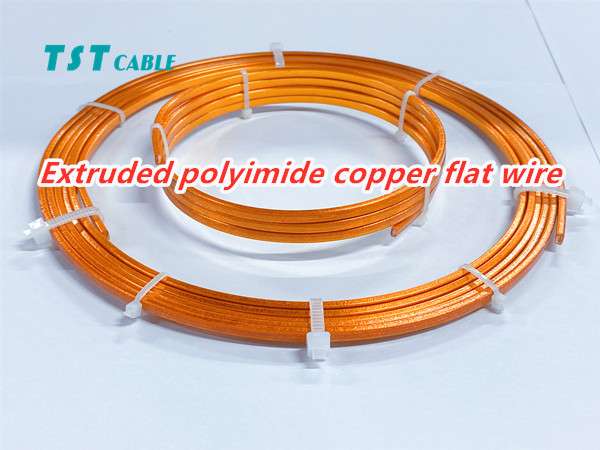
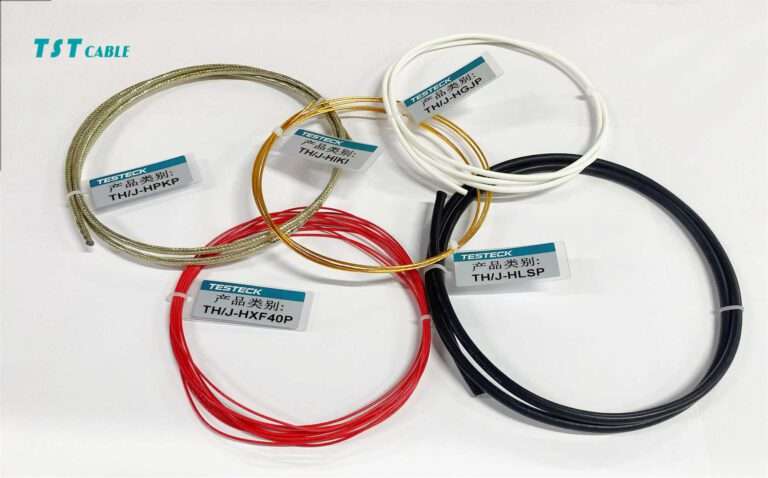
TST CABLE is a high-tech enterprise in China specializing in the R&D and manufacturing of high-performance PI motor flat wire. Having overcome the insulation challenges of the 800V high-voltage platform, its products boast a PDIV ≥ 1500V, corona resistance exceeding 1000 hours, and a wide temperature range of -269℃ to 380℃. TST CABLE’s polyimide (PI) motor flat wire, with its superior performance in extreme temperature resistance, high insulation, and radiation resistance, is widely used in high-end equipment manufacturing fields with extremely stringent material requirements. It provides high-power-density, high-reliability insulation solutions for new energy vehicles, medical, aerospace, and high-end equipment.
Five Advantages of TST CABLE PI Motor Flat Wire:
Extreme High Voltage Resistance: PDIV ≥ 1500V, corona resistance exceeding 1000 hours.
Wide Temperature Range Adaptability: -269℃ to 380℃, temperature resistance exceeding 200℃.
Excellent Mechanical Strength: Tensile strength > 350MPa, resistant to bending without cracking.
High power density: Insulation as thin as 0.08mm (latest technology reaches 0.01mm), slot fill factor increased by 30%.
High reliability: Extrusion-free, ATF oil resistant, low gas release.
TST CABLE PI motor flat wire has 7 major industry applications including:
- Aerospace and Defense: This is one of the core application areas for polyimide cables, accounting for approximately 38% of global demand.
Aircraft wiring: Widely used in avionics, engine control units, and flight instruments of passenger aircraft such as the Boeing 787, capable of withstanding extreme temperature differences from -269℃ to 400℃.
Spacecraft and Deep Space Exploration: Used in the control systems of satellites, rockets, and Mars rovers (such as NASA’s Mars rover), capable of resisting strong cosmic ray radiation and ensuring signal and power transmission in extreme space environments.
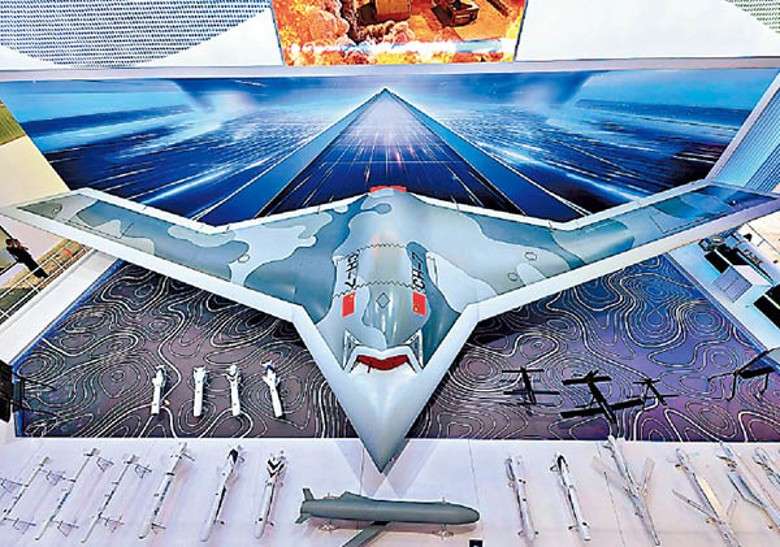
Military equipment: Used for high-frequency signal transmission and wiring of high-temperature components in missile, radar, and various weapon systems.
- New Energy and Electric Vehicles (EVs)
This is currently the fastest-growing segment, with a CAGR of 19.2% since 2020.
High-voltage battery systems: Used in battery management circuits and DC fast-charging systems under 800V high-voltage architectures, their insulation layers can withstand temperatures above 200℃ and high voltage stress.
Drive motors: As the core insulation material for drive motors in new energy vehicles, ensuring long-term stable operation of the motor under high power density.
- Semiconductors and Precision Manufacturing
Semiconductor equipment: In cutting-edge equipment such as ASML’s EUV lithography machines, polyimide cables are deployed in vacuum chambers, their extremely low outgassing and high cleanliness characteristics perfectly suited to ultra-high vacuum environments.
Industrial frequency converters and servo motors: Used in high-end industrial automation equipment, these frequency converters and servo motors ensure stable signals under precision control.
- Medical Equipment
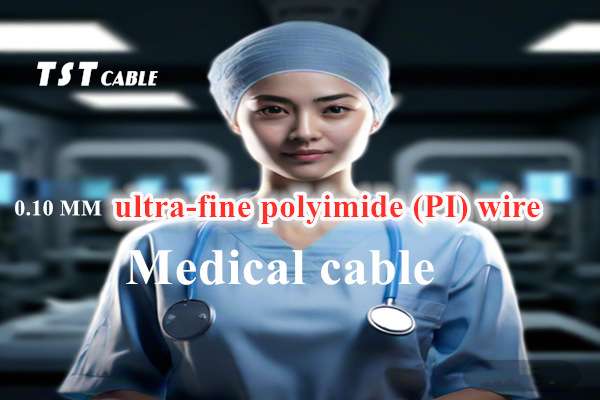
Large-scale medical imaging equipment: Wiring for coils and robotic systems in high-end MRI (Magnetic Resonance Imaging) equipment such as the Philips Ingenia Ambition. Biocompatibility and sterilization resistance are crucial.
Minimally invasive surgery and implantation equipment: Used in IVUS (Intravascular Ultrasound) catheters, surgical robots, and neural interfaces. Materials must possess biocompatibility and extremely high signal integrity.
- Renewable Energy
Wind power generation: Internal wiring for large offshore wind turbines such as the Siemens Gamesa. Insulation layers must withstand the salt spray, humidity, and mechanical stress of the marine environment for extended periods.
Solar systems: Used in photovoltaic inverters and solar monitoring systems to handle high-frequency switching currents and harsh outdoor environments.
- Rail Transportation and Nuclear Industry
Rail transportation: Used in the traction systems of high-speed rail, light rail, and subway trains, dealing with complex temperature variations and mechanical vibrations.
Nuclear Industry: Special radiation-resistant polyimide cables can be used in high-radiation environments such as inside nuclear reactors or particle accelerators, withstanding radiation doses up to 10⁹ Rad without cracking or attenuation.
- Consumer Electronics
Foldable Screens and AR/VR Devices: Ultra-thin polyimide cables are used in the hinge components of foldable phones such as the Samsung Galaxy Z Fold, capable of withstanding over 200,000 folds without damage.
TST CABLE PI Cable (Motor Flat Wire) Manufacturing Process
The manufacturing process of polyimide (PI) cables is very complex and precise, with the core challenges lying in the preparation of the polyimide material and the molding of the insulation layer. Based on current mainstream manufacturing technologies, the process can be mainly divided into the following key stages:
- Raw Material Preparation and Polyamic Acid (PAA) Solution Synthesis
The first step in manufacturing is the preparation of the polyimide precursor. Under a protective atmosphere such as nitrogen, the diamine monomer is dissolved in an organic solvent, and then the dianhydride monomer is slowly added at a precise molar ratio. Both react in a solution under low-temperature conditions (typically between -20°C and 25°C) to produce a linear polyamic acid (PAA) solution. After the reaction, the solution needs to be allowed to stand for degassing to remove air bubbles and ensure uniformity of subsequent coating.
- Conductor Pretreatment
To ensure good adhesion between the insulation layer and the metal conductor, the conductor core, such as copper, usually requires surface treatment, for example, increasing the surface roughness to enhance mechanical bonding.
- Precision Coating and Drying
The prepared polyamic acid paint is precisely coated onto the pretreated conductor surface in multiple applications. This process requires extremely high precision and typically employs a “four-coat, four-bake” process, alternating between multiple coatings and multiple drying cycles. After each coating, a programmed temperature rise drying process (e.g., 80°C-200°C) is required to remove the solvent and form a semi-solid gel film.
- High-Temperature Imidification (Cycling Reaction)
This is the most critical step in converting polyamic acid into polyimide. After coating and initial drying, the conductor undergoes high-temperature sintering to induce a dehydration and cyclization reaction in the polyamic acid, ultimately forming a dense polyimide insulation layer. This process typically employs a multi-stage heating strategy (e.g., initial curing at 370-430℃, followed by a final high-temperature curing at 480-550℃) to ensure an imidization degree of over 95%, thereby endowing the cable with excellent heat resistance and mechanical strength.
- Composite Structure Molding (for high-end cables)
In the manufacturing of some high-performance polyimide cables (such as polyimide-PTFE composite insulated cables), an insulating elastomer layer is first applied after conductor stranding to enhance vibration resistance, followed by sequential coating with a polyimide layer and a PTFE layer, and then final curing.
- Finished Product Testing and Packaging
After manufacturing, TST CABLE PI cables (motor flat wires) must undergo comprehensive performance testing, including insulation resistance, conductor resistance, high voltage resistance, and thermal aging tests, to ensure stable performance under extreme high-temperature or vacuum environments. Products that pass the test can only be stored and shipped after being marked and packaged.
Facing the global energy transformation and the era of high-voltage electrification, TST CABLE deeply understands that insulation materials are the “lifeline” for ensuring the safety and efficiency of motors. Leveraging its profound expertise in materials science and precision manufacturing processes, we have successfully overcome the challenges of partial discharge and insulation failure under high-voltage platforms of 800V and above. Our core product—extruded PI motor flat wire—with its extreme high-voltage withstand performance of PDIV≥1500V, wide temperature range adaptability from -269℃ to 380℃, and high power density resulting from ultra-thin insulation, is becoming the cornerstone of next-generation high-efficiency motors.
Also available in:
 English