
—A “space nerve” engineering plan to traverse the Van Allen radiation belts
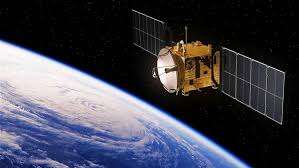
In low Earth orbit (LEO), geostationary orbit (GEO), and even deep space exploration missions, satellite cables must withstand continuous bombardment from high-energy electrons, protons, heavy ions, and gamma rays. Traditional polyimide (PI) or PTFE cables are prone to ionization damage, atomic displacement, and surface charging under these conditions, leading to insulation degradation and even catastrophic discharge. PEEK (polyetheretherketone), with its aromatic rigid structure and excellent overall performance, has become a key material for high-reliability satellite power and signal transmission systems.
I. Challenges of Space Radiation Environment to Cables vs. PEEK Coping Mechanisms
1.1 Characteristics of Satellite Orbital Radiation Environment
| Track type | Main radiation source | Typical dose/infusion | Threat to cables |
| Low Earth Orbit (LEO, 400–2000 km) | Van Allen inner band proton South Atlantic anomaly electron | Proton: 10⁹–10¹⁰ p/cm² Electron: 10¹⁰–10¹¹ e⁻/cm² | Surface charging, deep charging |
| Geosynchronous orbit (GEO, 36,000 km) | Van Allen external electron solar proton event | Electron: 10¹¹–10¹² e⁻/cm² Proton: 10⁸–10⁹ p/cm² | Deep charging (>1mm depth) |
| Deep space exploration (Lunar/Mars) | Galactic cosmic ray (GCR) solar particle event (SPE) | Heavy ions: 10⁶–10⁷ ions/cm² | Single-event effect, total dose accumulation |
1.2 PEEK’s Triple Shield Against Space Radiation
Key advantages:
✅ Total dose tolerance: Dielectric strength remains >90% after 100 krad (1 kGy)
✅ Resistance to deep charging: Volume resistivity >10¹⁶ Ω·cm (suppresses charge accumulation)
✅ Low outgassing rate: TML <0.5% (meets NASA SP-R-0022A)
Actual measurement data (ESA & NASA):
100 krad γ-irradiation: 85% of tensile strength retained, tanδ change <5%.
Electron irradiation of 1×10¹¹ e⁻/cm²: No surface discharge (microcracks appear in PI cable)
Thermal vacuum cycling (-100℃↔+125℃×100 cycles): Dimensional change <0.1%
II. Typical Application Scenarios of PEEK Cables in Satellites
2.1 High-power/high-reliability systems (PEEK preferred)
| System Name | Cable function | PEEK value |
| Solar cell array | Power transmission bus (100V/10A+) | Resistance to atomic oxygen corrosion + resistance to UV aging |
| Propulsion system | Electric thruster (Hall/ion) high-voltage line | Withstands 1000V+ deep charging to prevent discharge breakdown. |
| Load instrument | High-frequency signal line for radar/laser rangefinders | Low dielectric loss (tanδ<0.002), stable phase |
| Attitude control system | Reaction wheel motor power line | Vibration resistant + high and low temperature cycling (-100~125℃) |
| Thermal control system | Electric heater control line | Withstands transient high temperature of 200℃ (safety margin) |
2.2 Adaptation to Special Environments
Atomic oxygen (LEO): A dense oxide layer forms on the PEEK surface, preventing further erosion (superior to PI).
Ultraviolet radiation: The benzene ring absorbs UV energy, preventing chain breakage (PTFE is prone to pulverization).
Micrometeoroid impact: High toughness (notched impact 15 kJ/m²) resists micro-damage propagation
Application scenarios :
“The antenna support and cable outer layer of the Beidou-3 satellites all rely on it”—this is the large-scale application of PEEK in China’s navigation satellites .
“Even when exposed to strong radiation, its performance will not significantly decrease”—verifying its space radiation tolerance.
III. Structural Design and Key Technical Parameters of PEEK Cables for Satellites
3.1 Typical Structure (Taking GEO Communication Satellite as an Example)
Core performance indicators (ECSS-Q-ST-70-08C requirements)
| parameter | Require | Test Standards | Measured PEEK value |
| Total dose tolerance | ≥100 krad (Si) | ASTM E1249 | Performance meets target after 150 krad |
| Total Gas Output (TML) | <1.0% | ASTM E595 | 0.3–0.5% |
| Condensable volatile organic compounds (CVCMs) | <0.10% | ASTM E595 | 0.02–0.05% |
| Thermal vacuum stability | -100~125℃ × 100 times | ECSS-Q-ST-70-02 | Size change <0.1% |
| Atomic oxygen erosion rate | <1×10⁻²⁴ cm³/atom | NASA TM-2003-212733 | 3×10⁻²⁵ cm³/atom |
| Dielectric constant (@1GHz) | 3.2±0.1 | IPC-TM-650 2.5.5.9 | 3.18 |
Key points for process control:
Ultra-high purity: Metal ions ≤0.1 ppm (ICP-MS detection, anti-contamination optical payload)
Extrusion precision: Concentricity >98% (laser online monitoring ensures impedance consistency)
Termination process: Laser welding (avoids mechanical damage and improves reliability)
IV. International Certification and Localization Progress
4.1 Mandatory Certification Standards
| Standards system | Core Requirements | Certification bodies |
| ECSS-Q-ST-70-08C (Europe) | Material space applicability | ESA/ESTEC |
| NASA SP-R-0022A (United States) | Gas output rate + total dose | NASA GSFC |
| MIL-STD-883 (United States) | Microelectronic device compatibility | DoD |
| QJ 20286A (China) | Aerospace Materials Specifications | China Aerospace Science and Technology Corporation |
4.2 Breakthrough in Domestic Production (Core Knowledge Base)
| milestone | content | significance |
| BeiDou satellite applications | Antenna bracket and cable outer layer are made of PEEK | On-orbit verification > 10 years (knowledge base) |
| Material self-sufficiency | Zhongyan Technology’s PEEK has passed aerospace-grade certification. | Breaking Victrex’s monopoly |
| 3D printed parts | Carbon fiber reinforced PEEK for scaffolds | 70% lighter than titanium alloy (Knowledge Base) |
| Supply chain security | China’s domestic production capacity of fluoroketones ranks first in the world | Ensure raw material supply |
Market data:
The global market size for PEEK cables used in satellites is approximately US$80 million per year, with China accounting for over 25% and growing at a rate exceeding 20% (driven by the BeiDou + remote sensing constellation).
V. Life Prediction and Economic Analysis
5.1 On-orbit lifetime extrapolation model
| Task type | Irradiation environment | PEEK cable lifespan | Verification method |
| LEO remote sensing satellite (5–8 years) | Electron + Atom Oxygen | >15 years | Ground simulation + on-orbit monitoring |
| GEO communications satellite (15 years) | Deep charging of electrons | >20 years | Accelerated Electron Irradiation Experiment |
| Deep space exploration (10+ years) | GCR+ SPE | >25 years | Heavy ion irradiation simulation |
✅ Conclusion: PEEK cables have a design life far exceeding the satellite mission cycle, providing ample safety margins.
5.2 Comparison of Life Cycle Costs (LCC)
| Cost items | PI cable | PEEK cable | difference |
| Initial Procurement | 1.0x | 1.8x | +80% |
| On-orbit failure risk | High (deep charge/discharge) | Extremely low | Insurance premiums ↓50% |
| Losses due to mission delay | Possible (load failure) | none | Value cannot be quantified |
| LCC (2015 GEO) | 1.0x | 0.6x | ↓40% |
Economic nature:
Satellite launch costs exceed $50,000/kg, and reliability takes precedence over initial cost—PEEK’s “zero failure” characteristic is its core value.
VI. Implementation Recommendations and Risk Control
6.1 Selection and Procurement Guidelines
| elements | Require | Verification method |
| Material grade | Victrex APTIV™ 450FC30 / Zhongyan HPI-2000 | Provide ECSS/NASA test reports |
| Purity grade | Aerospace grade (metal ions ≤0.1ppm) | ICP-MS test report |
| Authentication status | ECSS-Q-ST-70-08C + NASA SP-R-0022A | Verify the certification number |
| Supplier Qualification | AS9100D Aerospace Quality System | Certificate verification |
6.2 Installation and Maintenance Specifications
Bending radius: ≥6×D (to avoid microcracks)
Fixed spacing: ≤300mm (to prevent micro-vibration fatigue)
Termination process: Special tools + laser welding (ordinary crimping is prohibited)
Ground testing: Combined thermal vacuum and irradiation test (simulating on-orbit environment)
6.3 Risk Avoidance Checklist
| risk | countermeasures |
| pseudo-space-grade materials | A complete set of reports including FTIR, DSC, and ICP-MS is required. |
| Exhaust rate exceeds standard | Commission a third party to conduct retesting (such as the Lanzhou Institute of Chemical Physics, Chinese Academy of Sciences). |
| Termination failure | MIL-DTL-38999 connectors are used, and solder joints are inspected by X-ray. |
| batch inconsistency | Establish incoming inspection standards (independent testing for each batch). |
VII. Future Technological Evolution
Nano-modified PEEK:
Adding BN nanosheets → Thermal conductivity increased to 1.5 W/m·K (heat dissipation optimization)
Adding graphene → Controllable volume resistivity (prevents deep charging)
Smart cables:
Built-in fiber Bragg grating (FBG) → Real-time monitoring of cable temperature/strain/radiation dose
Additive manufacturing:
PEEK powder SLS printing of complex connectors → Reduces interfaces and improves reliability
Multifunctional integration:
PEEK matrix embedded strain sensor → Structural health monitoring (SHM)
A reliable link in deep space
“In the silence of 36,000 kilometers, the failure of a single cable could turn a billion-dollar satellite into space debris.”
The application of PEEK insulated cables in satellites represents a perfect fusion of materials science and aerospace engineering:
Performance: The only technology to simultaneously overcome the quadruple limits of radiation, atomic oxygen, thermal cycling, and high power.
Reliability: Eliminates the risk of deep charging in PEEK, ensuring 15+ years of on-orbit operation.
Economics: Reduces total lifecycle costs by 40%, supporting profitability in commercial aerospace.
Strategically: A breakthrough in domestic production overcomes bottlenecks, strengthening the security of space infrastructure.
When BeiDou satellites provide precise positioning to the world,
and when remote sensing satellites transmit images of Earth,
behind the scenes, PEEK cables silently and steadfastly guard the Van Allen radiation belts.
TST CABLE recommends:
GEO/Deep Space Mission: Utilizing PEEK cables throughout (power + signal)
Satellite rockets : PEEK is the preferred choice for critical systems (propulsion/payload).
The reliability of every cable is a solemn commitment to deep space exploration.
Also available in:
 English